How a Charleston diplomat, a Mexican roadside weed, and a little Lowcountry botany gave the country its Christmas flower.
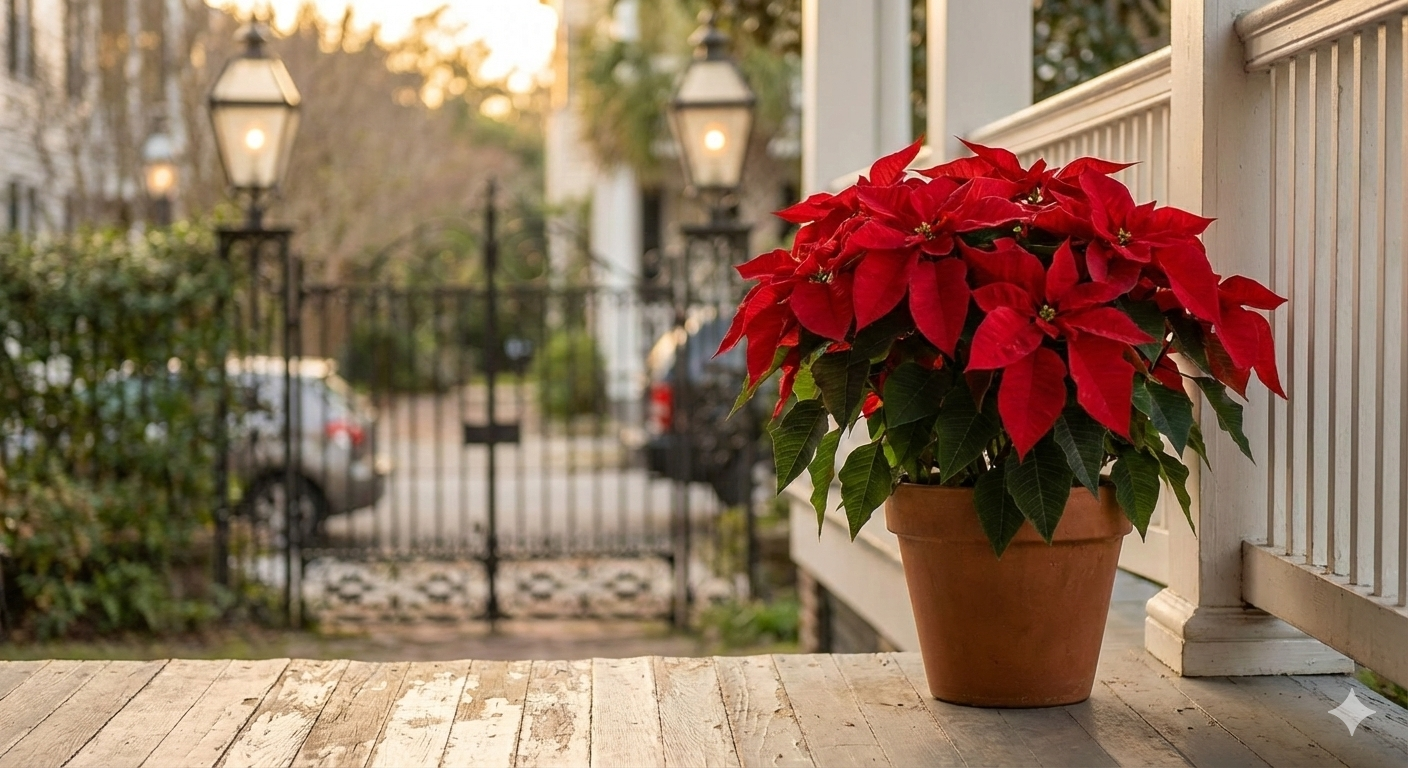
But before it was a holiday staple, and before it was a cash crop sold in foil-wrapped pots, it was a wild shrub growing in the ditches of Taxco, Mexico. And the only reason it is sitting on your mantle today is because of a Charleston native named Joel Roberts Poinsett.
Its roots trace back, quite literally, to South Carolina soil.
The Diplomat with a Green Thumb
Born in Charleston in 1779, Joel R. Poinsett was the definition of a Southern Renaissance man. He was a physician, a U.S. Congressman, a Secretary of War, and a founder of the National Institute (which would later become the Smithsonian).
But in 1825, President John Quincy Adams appointed Poinsett as the very first U.S. Minister to Mexico.
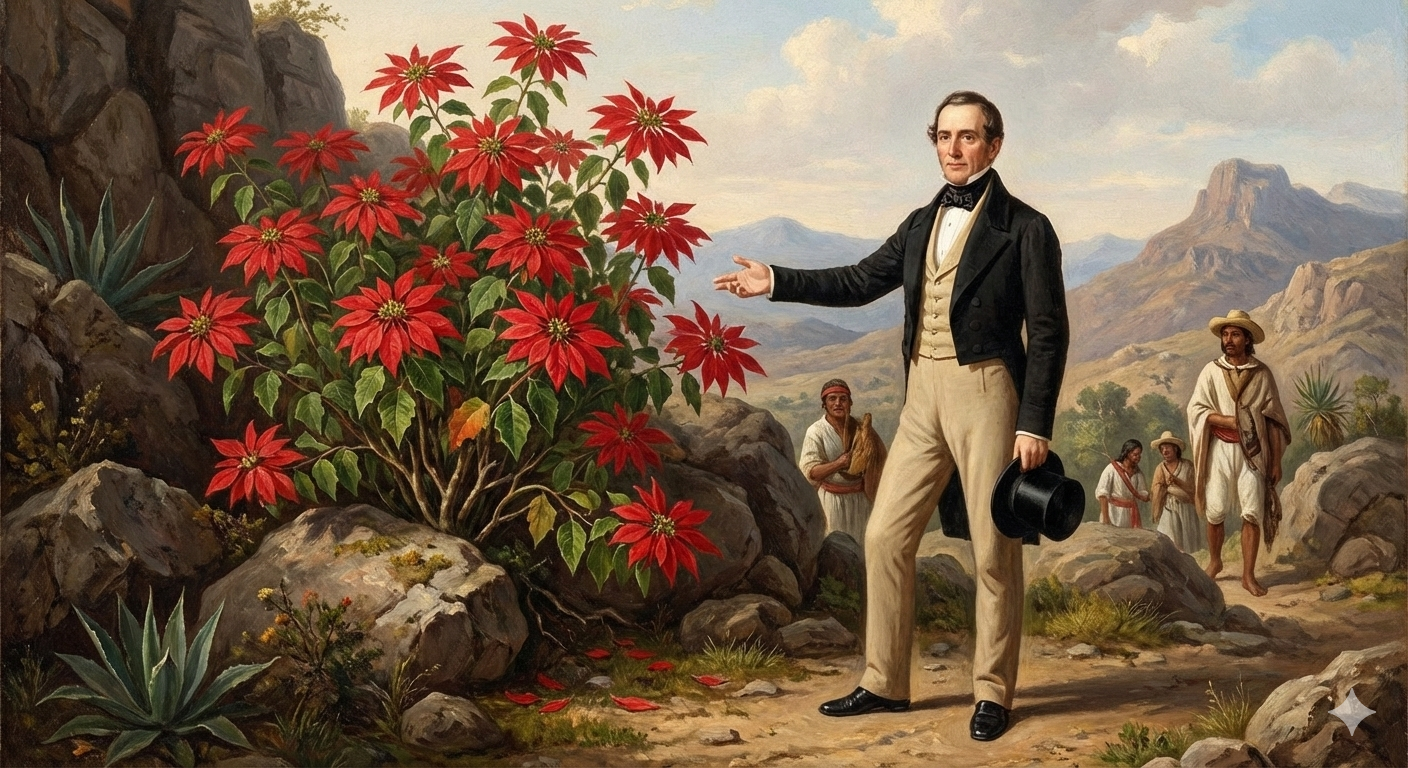
While navigating the complexities of international politics, Poinsett found himself distracted by the local flora. In the winter of 1828, while wandering the countryside near Taxco, he became captivated by a tall shrub with brilliant red bracts (often mistaken for petals) that the locals called Flor de Nochebuena, the Flower of the Holy Night.
From Mexico to the Holy City
Poinsett immediately began clipping samples. He packed the cuttings into crates and shipped them from Mexico back to his home in South Carolina, as well as to botanist friends in Philadelphia.
It was here, in the humid, fertile air of the South, that the plant was propagated and cultivated in the United States for the first time. Poinsett grew them in his own greenhouses, fascinated by the plant’s ability to bloom brightest during the shortest, darkest days of the year.
He began sharing the plants with friends in Charleston and botanists across the country. For years, the plant went by its scientific name, Euphorbia pulcherrima (“the most beautiful Euphorbia”), or simply “the painted leaf.”
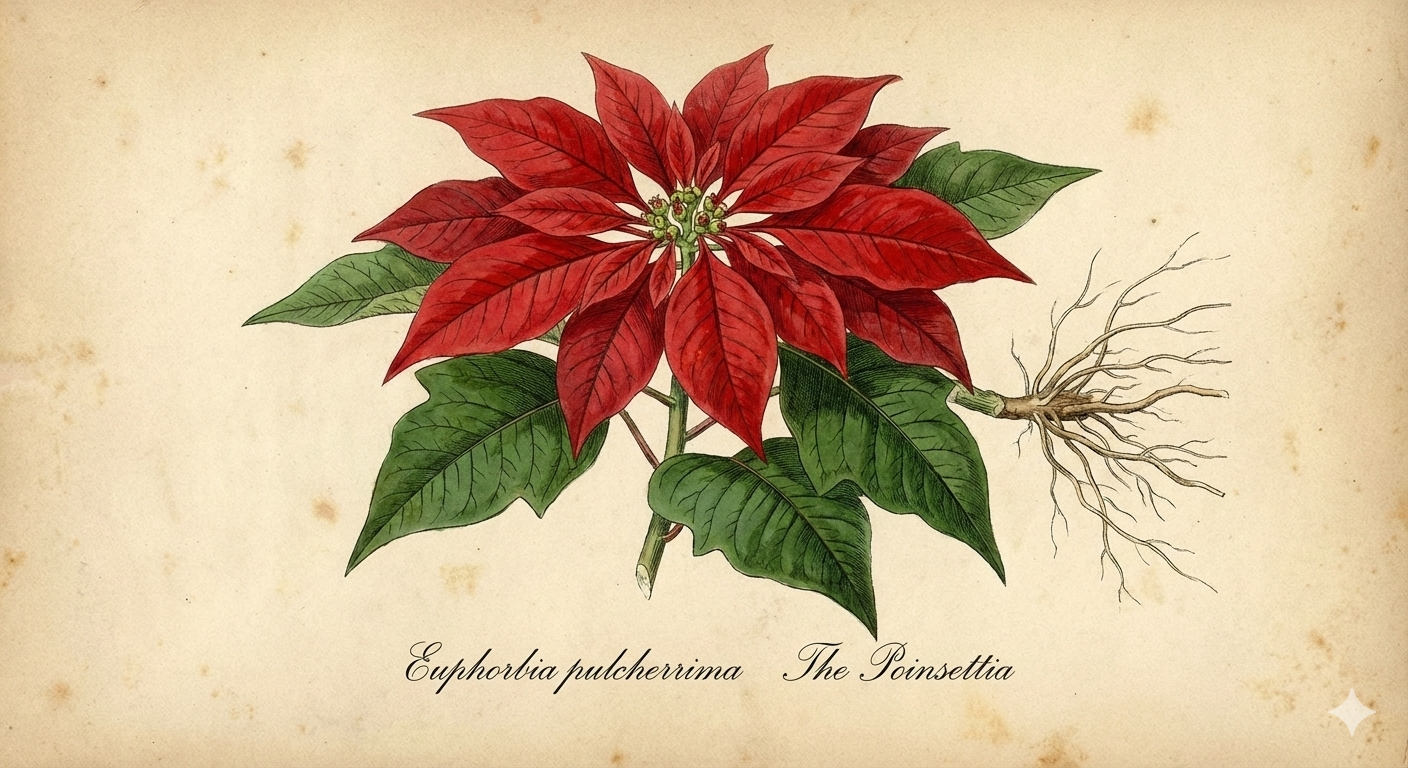
A vintage botanical plate showing the plant under its scientific name, Euphorbia pulcherrima, and its common name, The Poinsettia.
It wasn’t until around 1836 that historians and botanists suggested the plant be renamed to honor the man who introduced it to the West. The “Poinsettia” was born.
A Legacy Buried in Stateburg
Joel Poinsett eventually retired to a plantation in Georgetown County, continuing his love affair with botany. He died in 1851 and is buried at the Church of the Holy Cross in Stateburg, SC (just outside the Lowcountry, near Sumter).
Today, the Poinsettia industry is massive, but it remains a quiet nod to South Carolina’s botanical history.
So, this season, when you water that festive red plant on your table, remember: you aren’t just looking at a Christmas decoration. You’re looking at a piece of Charleston history, a living souvenir from a diplomat who knew a good thing when he saw it.