Pumpkin cinnamon rolls are wetter and stickier than any cinnamon roll dough you have handled, and that is the part that catches people. The pumpkin goes in the dough, not the filling, where it colours the crumb orange and keeps it soft. Use plain pumpkin puree, not pumpkin pie filling, which is already sweetened and spiced. Pumpkin carries a lot of water, so the dough comes out stickier than ordinary cinnamon roll dough, and the instinct to fix that by adding more flour is what makes the rolls dry. The correct feel is a dough that sticks to the bottom of the bowl and pulls away from the sides. Add the last of the flour a tablespoon at a time and judge by feel.
The dough is wetter than you expect
Instant yeast goes straight in with the flour. Active dry yeast needs proofing first in milk warmed to 105–110°F for 5 to 10 minutes. The dough spices are cinnamon, nutmeg, and ginger. Knead 8 to 10 minutes by hand, or 5 to 6 minutes in a stand mixer with a dough hook. The first rise takes 60 to 90 minutes, until the dough has doubled.
Roll the dough, fill it, and cut the log
Roll the dough to roughly 16 by 12 inches. The filling is dark brown sugar, cinnamon, nutmeg, ginger, a pinch of cloves, and three quarters of a cup of roughly chopped pecans, which toast inside the spiral as the rolls bake. Spread the filling and roll the dough up from the long edge into a log. Cutting the log is where the shape is won or lost. Slide unflavored dental floss under the log and cross it over the top, which cuts cleanly without pressing the spiral flat. A serrated knife works too, used in a sawing motion with no downward pressure. Pressing straight down flattens the spiral. Cut twelve rolls and set them cut side up in a 9×13 dish.
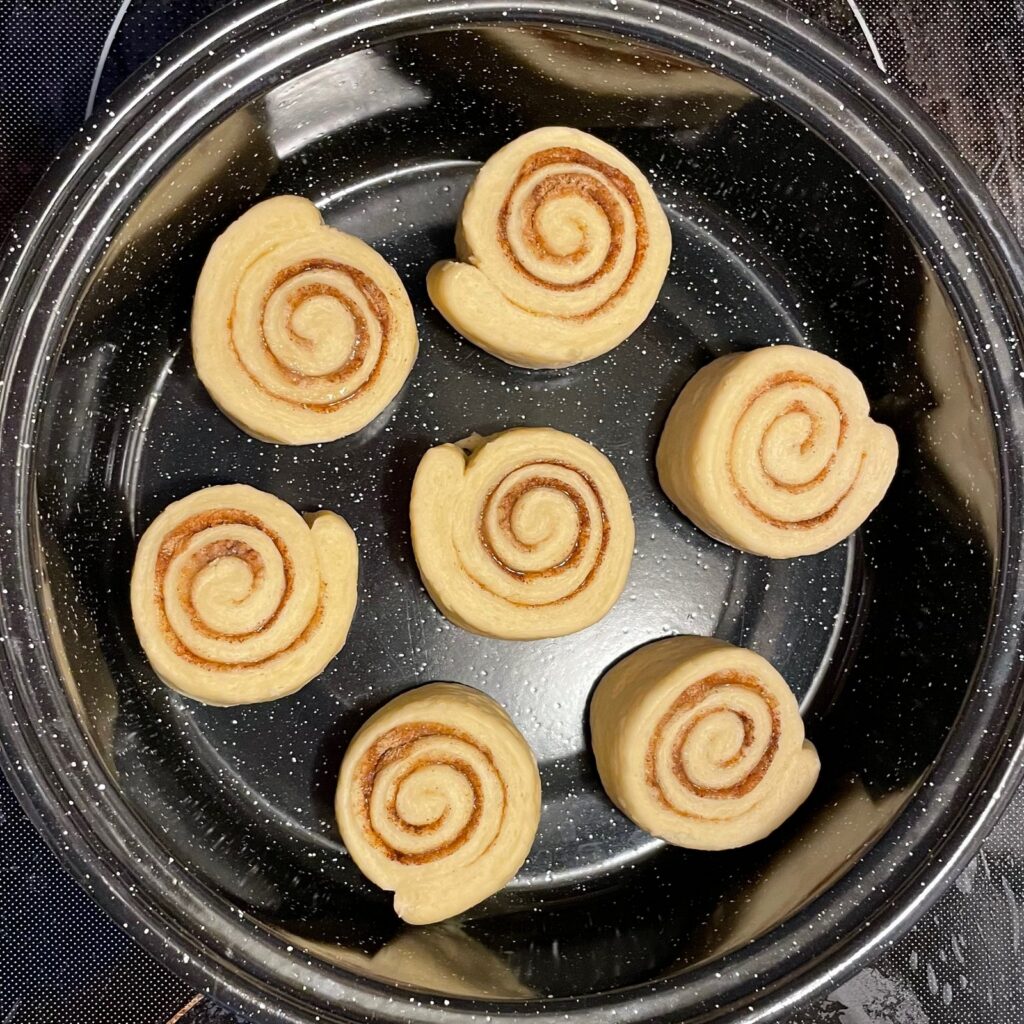
The rolls can rest overnight in the fridge
The rolls are already cut by now, which is what makes the overnight pause possible. Cover the dish tightly and refrigerate up to 14 hours. Next morning, let the dish sit one hour at room temperature, then bake. This is what makes them a weekend-morning bake instead of a five-in-the-morning one. The full recipe is here, and the prep runs about 45 minutes with about three hours start to finish.
A second rise and a hot oven finish the rolls
The second rise takes 30 to 45 minutes, until the rolls are puffed and touching. Bake at 350°F for 22 to 25 minutes. The rolls in the middle of the dish stay paler than the ones round the outside, and that is what done looks like — waiting for the middle ones to brown gives dry rolls. Spread cream cheese icing while the rolls are warm so it runs down into the spirals. Hot rolls turn it to liquid, and cold rolls leave it sitting on top. As with buttermilk biscuits, handling the dough, not the ingredient list, is what decides the result.
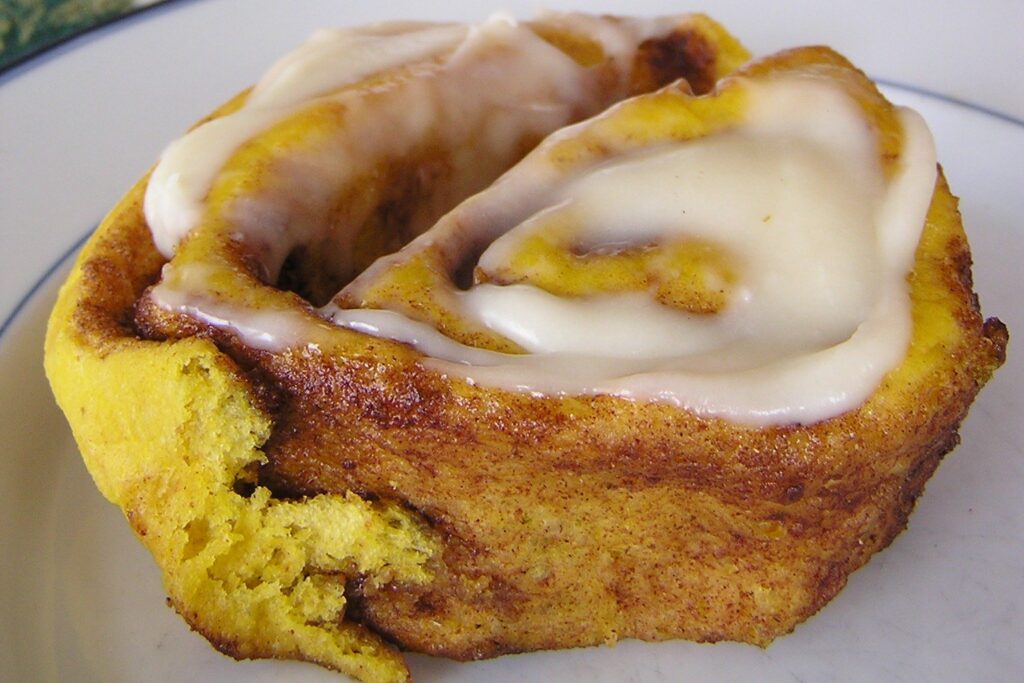
Photographs: WhatamIdoing, CC BY-SA 4.0; Chelsea Nesvig, CC BY 2.0, cropped. Both via Wikimedia Commons.